






After one full year of the all-male class model being used at Hun, students and faculty alike have had the opportunity to examine both its benefits and shortcomings as a temporary solution to the gender gap in the student body.
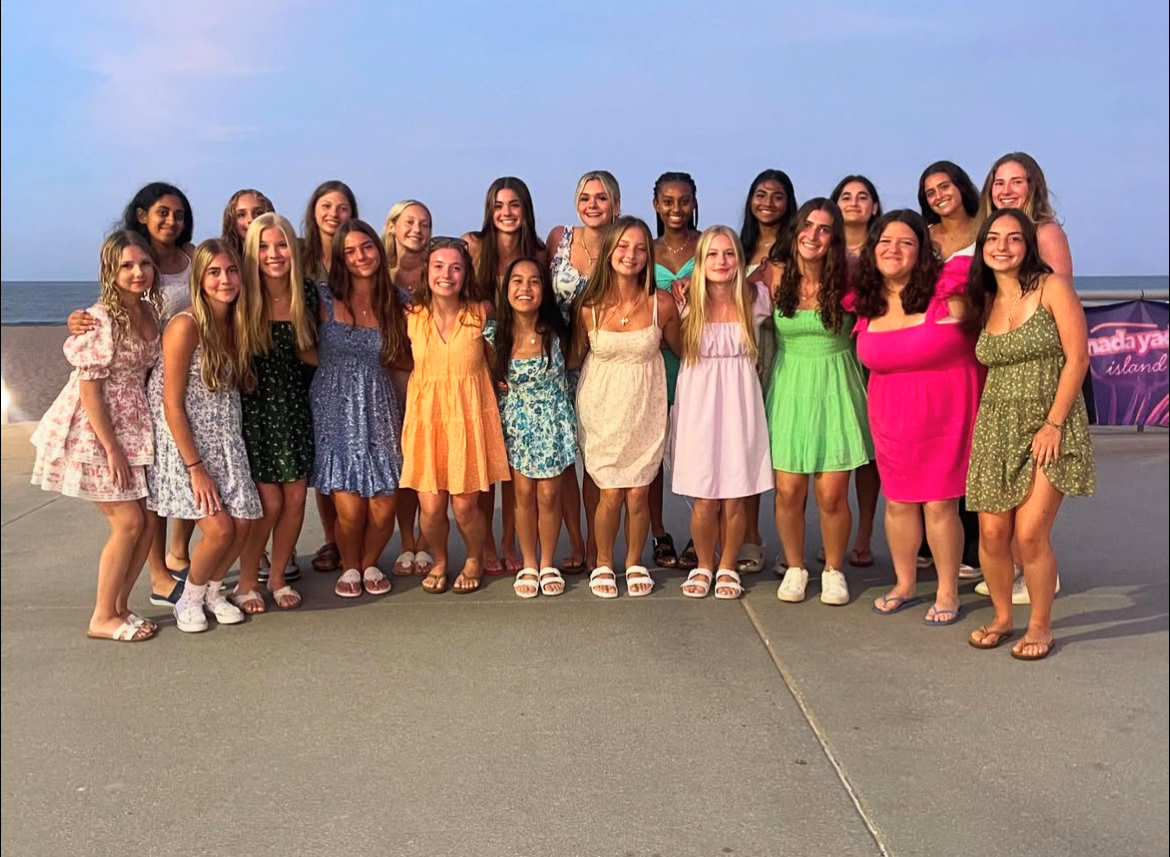
In the 2024-2025 school year, male students outnumbered female students by 15.52%. Including the Middle School, there were 398 boys (57.76%), 290 girls (42.09%), and 1 non-binary student (0.15%). In theory, the simple fix would be to just admit more girls, but it isn’t that easy.
“We need mission aligned kids,” says Alexander Lopes, an Associate Director of Admissions. “Just by ‘adding more girls,’—if they’re not really a fit for Hun— we’re not improving the female experience.”
Hun’s mission statement states: “The Hun School of Princeton empowers each student to thrive in a diverse and ever-changing world, by nurturing resilient character, providing individual mentorship, and inspiring vigorous and joyful learning.”
Everything Hun does is done with this promise in mind and changes are being made in order to achieve a true gender balance in coming years.
Mike Savino, another Associate Director of Admissions, describes one major change being implemented in admissions, saying, “With our new Hun School scholarship for female student leaders, we’re making a real intentional push to have the next generation of female leaders be built here at Hun.”
As Hun Admissions works to set the young women of future classes up for success, current female student-leaders on campus are taking action and asking questions about the current solutions to the gender-gap.
Leader of the Gender Equity Matters club Mya S. ‘26 recognizes that all-male classes create a shared identity amongst students but worries that “they can create a classroom culture in coed classes where students feel like the interactions between male students are different than between male and female students.”
Many classes at Hun are intentionally taught in a way that makes room for a wide range of perspectives. Some students are concerned that all-male classes simply are not able to do so in the same way that coed classes are.
“The dual perspective of gender is necessary to cover all perspectives in the classroom” says Bre S. ‘25, the only girl in her Sociology of Sports class. “Still, being the only girl in the class is uncomfortable.”
While the all-male class model certainly has its flaws, the intention behind it is to increase gender equity within the classroom.
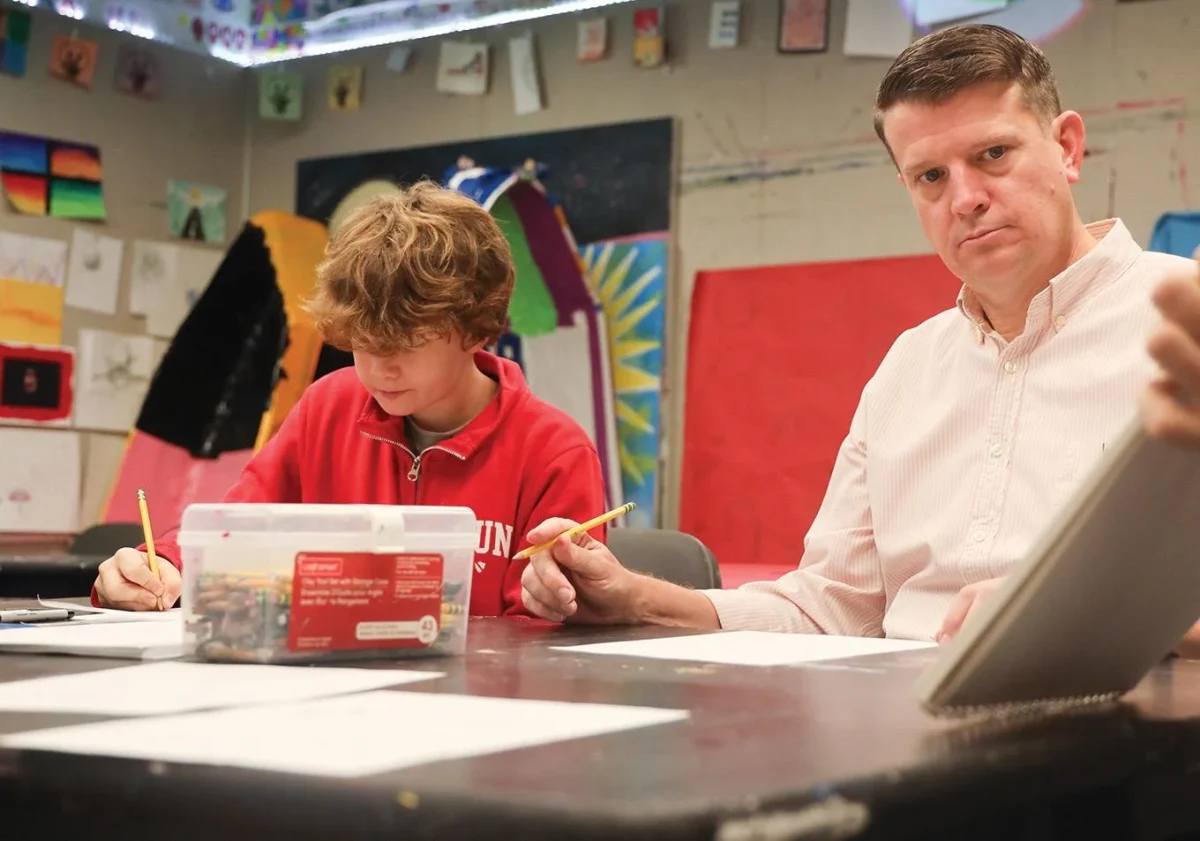
Dr. Holm, the female teacher of an all-male English 2 class, says, “I think that if having that all boy class creates greater gender equity in our other sections, than as a temporary measure, that feels worth it.”
She even feels that the all-male classroom model can positively influence the gender expression of the young men who are in them.
“I don’t want to use single gender classes as a way of reinforcing the binary. There is nothing you can say about all boys that will be true about that entire gender, but I have tried to allow a fuller range of expressions of gender because the dynamics are slightly different in all male classes.”
Students in all-male classes experience first-hand the bonuses and consequences of learning in a single-gender environment.
Sterling Desmond, a ninth grader in Mr. Brennan’s World Studies class, says, “My least favorite thing about being in an all boys class is that people mess around more because they’re more comfortable. A positive is that I’m not afraid to do group work and projects— they’re more fun and less awkward.”
Despite the awkwardness he perceives in coed interactions, he still believes those interactions are necessary for the challenge and growth that Hun’s classes strive to offer.
“I don’t think all-male classes are a good idea because feeling awkward and on your toes is a good thing; it leads to more focus and awareness rather than just being comfortable.”
Whether it be teacher, student, or member of the admissions team, the Hun community is intentionally conscious about the benefits and pitfalls of single-gender classes.
“I think in select-scenarios, it’s actually really advantageous, and maybe not so much in others” says Mike Savino. “But I think there is a purpose for maybe certain specific topics—like a health class or something like that—to have a small group of freshman boys that can talk about certain experiences and share in a way that they wouldn’t be comfortable with in an all gender classroom.”
Many factors came into consideration before the decision to implement single-gender sections into the schedule, but just as many factors–if not more– are considered in the admissions process each year. For this reason, it is impossible to identify one simple explanation for the gender discrepancies in Hun’s student body.
“You have to be careful about assigning causality,” Mike Savino explains. “Instead, you have to look at the program fit, siblings that go to Hun, family legacy, proximity, boarding, community, friends that go to Hun, reputation of the school based on your community.”
Despite having so many variables to account for, the goal is always to achieve a gender balance without interfering with the need for mission-aligned students.
“Our goal is to be as close as possible to a 50:50 boys to girls ratio, and year to year, we have to change our approach based on how many applications we’re getting and how we’ve yielded in past years.”
This ability to change and adapt is one Hun prides itself on, and their in-depth account of admissions data, student feedback, and administrative reflection allows them to provide an environment for their students that embodies the promise they make in their mission statement.
Katelyn Cassel, the Director of Enrollment Management, explains that “What Hun does really well is being responsive. As we talk about that joyful learning, you have to feel seen and known in the class, so this is a way that we are trying to prioritize the student experience through the gender imbalance until we have a greater balance.”
At its core, Hun is a place where students come to thrive regardless of the many identities that they possess. Just as all-male classes have acted as a temporary solution to the gender imbalance Hun has directed so many efforts to improve, students and families alike can trust Hun to continue to prioritize the student experience in coming years.